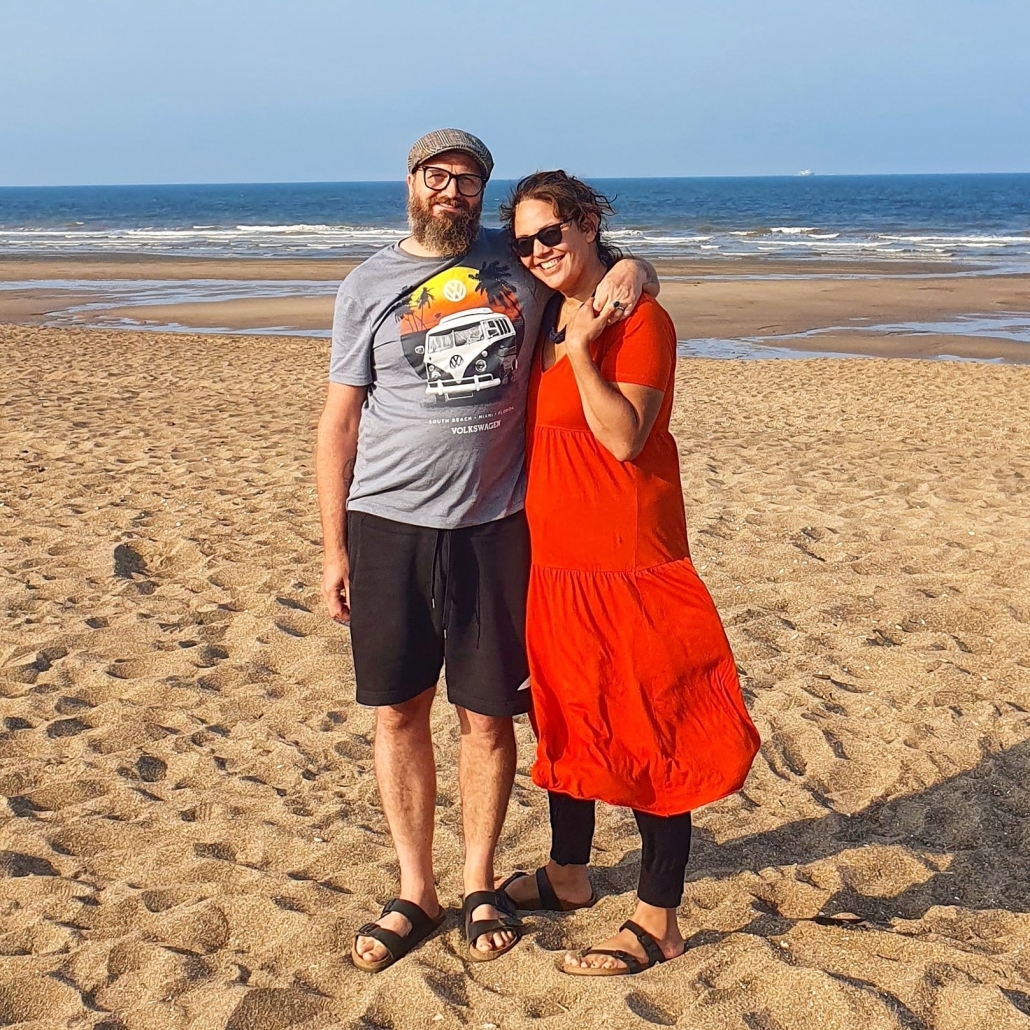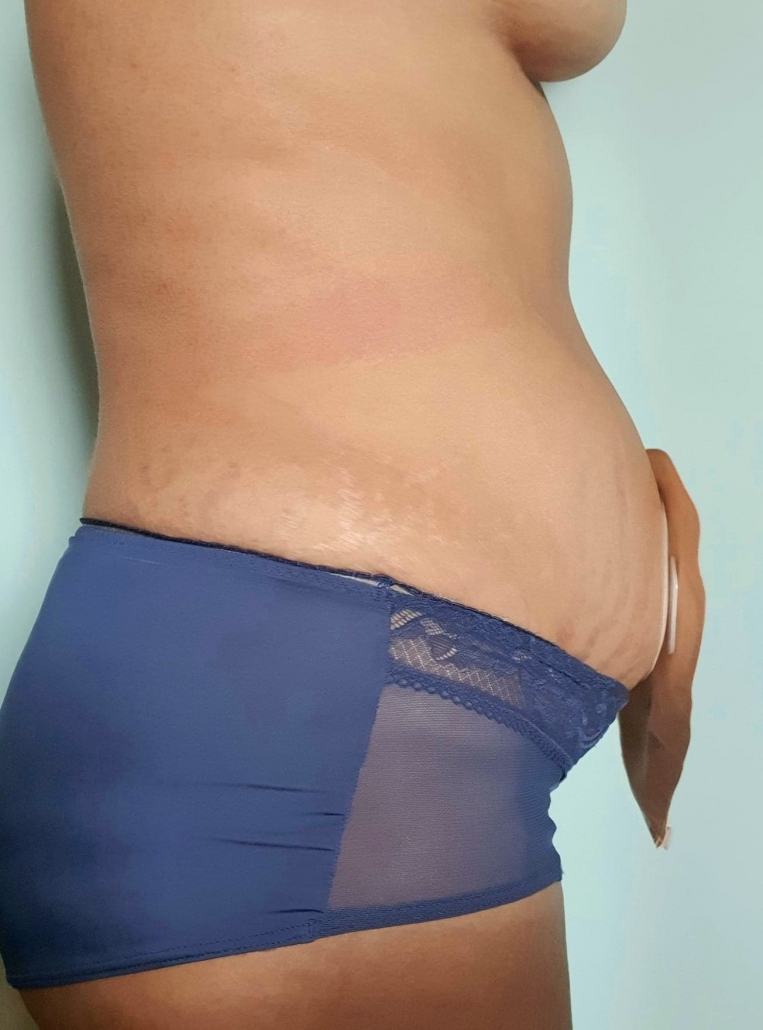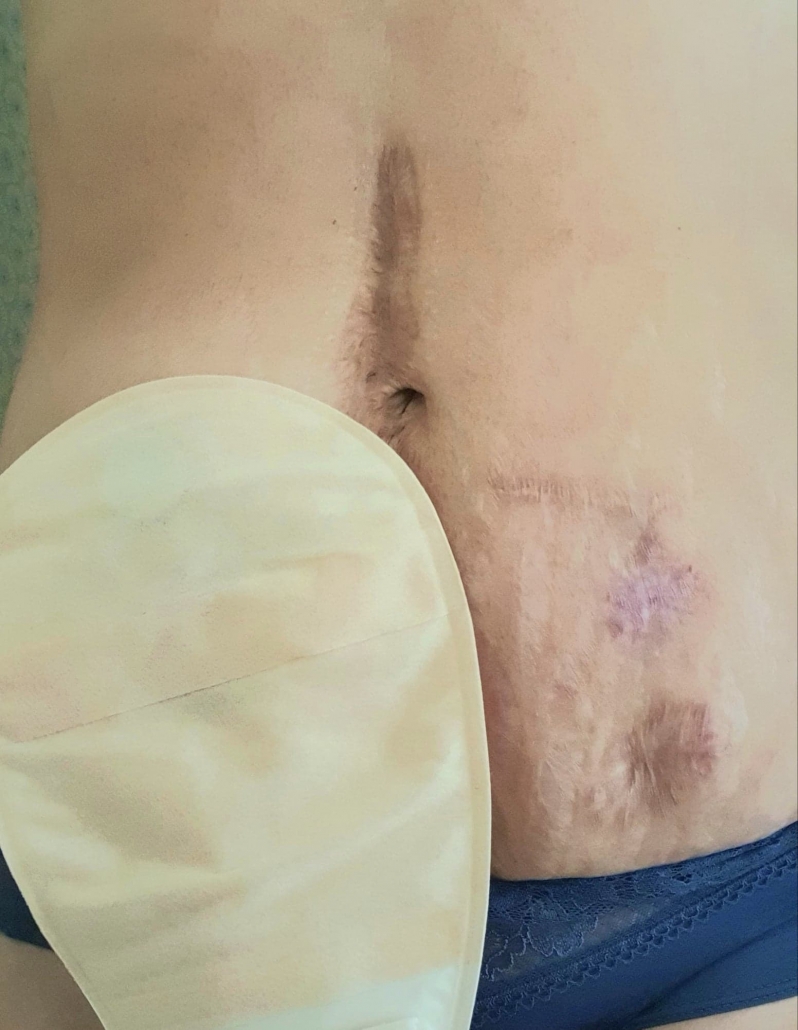
I got my first stoma in 2013 and apart from 18 months with a J-Pouch, I have had one ever since. My ileostomy is now permanent and I will have one forever. So I can’t believe it has taken me this long to figure out a solution to the smelly bin problem!! A nappy bin!
I have to say that it was someone on twitter who tweeted they have one. I am sorry I can’t remember who (but please do message me if you see this and I will happily mention you properly!)
Changing my ostomy bag
I change my ostomy bag about every 2 or 3 days when things are going well. But with leaks, if it’s hot or when I swim, it can be more often. Now I know I should probably just not be lazy and take the waste bags straight to the outside bin. But honestly sometimes I just can’t be arsed. Sometimes I am too fatigued or in too much pain and so I put them in our bedroom bin.
Anyway by the end of the week when I am emptying all the bins, there is a slight whiff to it. I use a waste bag, that looks like a dog poo bag, to wrap my used ostomy bag in but there can still be an odour. So after seeing the nappy bin suggestion I decided to give it a try.
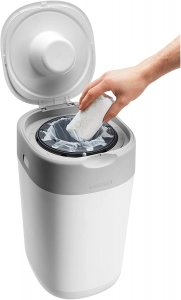
I have had it for a week now and I am really happy with it. I’m still putting the used ostomy bag, wipes etc in a waste bag. Then stick it in the top, twist the top panel and it is sealed and pushed down. The lid clicks closed and so far, no stink!
Lazy or genius?
I would say that this is by no means a necessity. I have managed for years without one and it isn’t a major issue. But sometimes when I have changed my bag in the middle of the night, the last thing I want to do is go outside to put waste in the big bin! When I am ill, I may need to change my bag several times in one day, I can’t be going up and down the stairs. Also I am just a bit lazy and if this takes a chore or two off my list and makes life a tiny bit easier then I will take that option!
I am really sensitive to smell since I had all my surgeries. I worry whether I smell of poo (I don’t!). Or if there is a smell when I change bags (there is!). Changing my bag means peeling the sticky flange off my skin and so the poo inside comes into contact with the air. So as when someone is pooing in the toilet, of course there is some smell! And sometimes it is worse than others. So having the waste bags in the bedroom bin is a bit of a worry for me. I have been assured by others that they can’t smell anything once it is all wrapped up, but it doesn’t stop my twitchy nose. This bin just puts my mind at ease and feels more hygienic than using a wastepaper basket or even a swing bin.
So I thought I would pass on this little titbit of knowledge that has definitely helped just a little with ostomy life. I also get asked sometimes if there is a gift I would suggest for someone with a new stoma, and you know what? This may be my suggestion from now on!
Peace and love
Sam xx
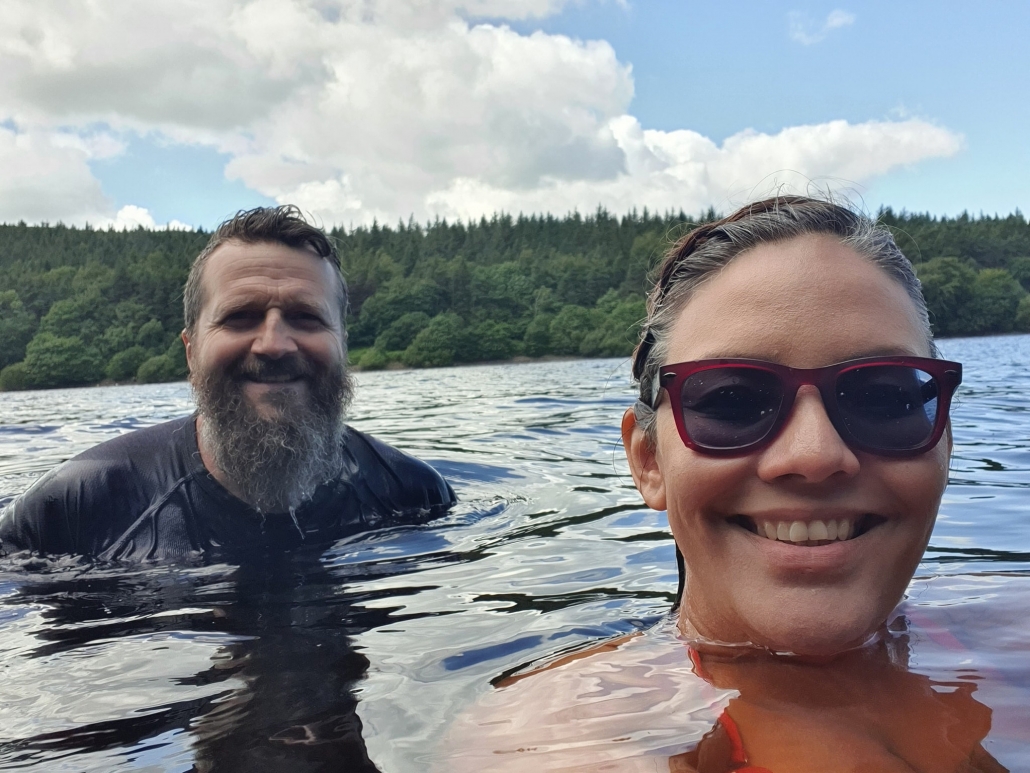
11/1/21 – I just wanted to add a little note to say that the first cassette lasted me till this weekend so around 11 weeks! My worry was that I would go through them really quickly but at this rate the 6 refills I got with this package well over a year!
Disclaimer
This is not a sponsored post, I wasn’t asked to promote or review this item and bought it myself. But the link above is an affiliate link and if you click and buy the item, I do get a few pence from the sale. Posts like this bring in a little money to keep SoBadAss going and free! If you would rather not buy through my affiliate link, just search for nappy bins and source one yourself! xx
http://www.sobadass.me/wp-content/uploads/2020/10/when-to-push-when-to-rest.jpg6281200samhttp://www.sobadass.me/wp-content/uploads/2015/09/sobadasslogo.pngsam2020-10-21 20:41:542021-01-11 15:17:02Lazy or Genius? The product that is making my ostomy life easier!
I was asked to interview Sheffield based author and poet Helen Mort for the Off the Shelf festival. It is my second year working for the literary festival and was an honour to speak to an award winning writer. Helen’s latest book is called Never Leave the dog behind and is an exploration of our love of dogs and of mountains.
The event was at the Crucible in Sheffield, a world renowned theatre that I have visited all my life in the audience. So it was such a thrill to be able to be on stage. Due to the pandemic, there were only a few tickets allowed to be sold though there were many more watching online at home.
Helen’s book is a beautiful mix of poetry, personal stories and the history of the relationship between human and dog in the setting of nature. She read a section of the book talking about her first ‘dog companion’ Bell. In a room of dog lovers, you could feel the passion, joy and heartfelt reactions as we all could understand the special relationships we have with our dogs.
We had a chat about everything from the loss of a dog through to the way becoming a parent changes our interaction with adventure and nature. There were some great questions from the audience especially one asking about how Donald Trump is the first American president in over 100 years to not be a dog owner and what that said about him.
The evening ended with Helen reading a poem from her book, called The Dogs.
Some mornings, waking up between the sandy whippet
and the black – their breathing as slow as mine,
their eyes more sorrowful – I remind myself I’m not a dog.
It’s not acceptable to taste the grass or roll in moss until
I’m musked with it. There are deer in the woods I’ll never see.
My thirst discriminates. It does not have me bend
my grateful head to puddles, gutters, hollows
in the rock. I don’t track rabbits in my sleep.
I’ll not know love like theirs, observed in mute proximity
and if I sometimes sit bolt upright after dark, sensing
a movement in the yard, it’s only that I’ve learned
a little of their vigilance. I’m not like them:
one night I’ll set off past the meadow, down
behind the beck, beyond the blunt profile of Silver Howe
If you would like to work with me for your event, you can use my contact page here. I have done live interviews at events, presented a Saturday morning show on BBC Radio Sheffield, taken part as a participant in radio and TV shows and done public speaking at events all over the UK and Europe. To discuss your requirements, please do get in touch.
http://www.sobadass.me/wp-content/uploads/2020/10/DSC00011.jpg16672500samhttp://www.sobadass.me/wp-content/uploads/2015/09/sobadasslogo.pngsam2020-10-20 18:59:392020-10-20 21:24:28Helen Mort Off the Shelf
This year I am thrilled to be interviewing Susie Dent of Countdown fame and Sheffield poet Helen Mort about her book Never Leave the dog behind.
Susie Dent is Britain’s favourite word expert. She has recently celebrated 25 years as the resident lexicographer in dictionary corner on Channel 4’s Countdown. Her latest book Word Perfect is a linguistic almanac offering a word or phrase for every day of the year. It is described by Jo Brand as “a golden vaulted cave of fascinating and funny hidden gems.
It was a virtual chat with Susie about her newest book Word Perfect. And it was an absolute joy to talk to her about her book and her life so far.
The video of the talk is still online on the Off the Shelf website. Though I don’t know how long it will be online for so check it out sooner rather than later!
Thanks for all the kind messages I have already received, it means the world!
http://www.sobadass.me/wp-content/uploads/2020/10/121969346_3313096802119267_6832301501517975251_o.jpg10801080samhttp://www.sobadass.me/wp-content/uploads/2015/09/sobadasslogo.pngsam2020-10-19 11:16:532020-10-19 11:16:55Susie Dent – Off the Shelf festival
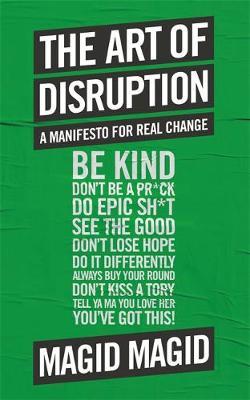
The Art of Disruption; a manifesto for real change is a book by Sheffield legend Magid Magid. “A Somali born, working class black muslim immigrant” who became the youngest ever Lord Mayor of Sheffield. A man who banned Donald Trump from the city and famously called him a wasteman… This book shares his commandments for living the best life and making the change in society you want to see.
Meeting Magid
When I first heard about Magid, I couldn’t help but smile. Seeing him as the Lord Mayor of Sheffield felt like a real change and an amazing representation of Sheffield, the city of Sanctuary.
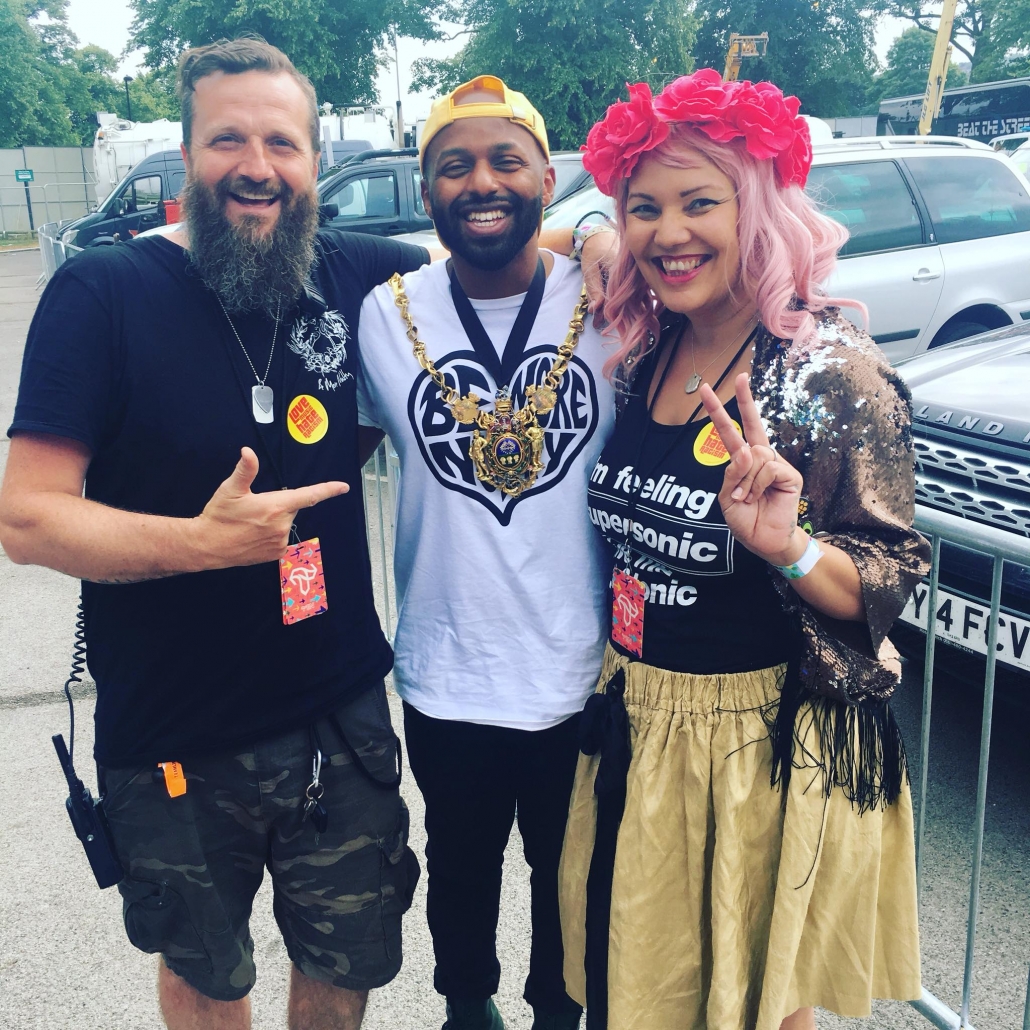
I met Magid a few times, mainly through Tramlines, the festival that my husband was director for. The cover of his book was a huge billboard that was displayed in the festival site. It was such a clear and brilliant message that was so far away from the usual work of past Lord Mayors and I watched hundreds, if not thousands of festival goers get their selfie with the poster and heard so many stories of personal connections to Magid. That he had attended their events, met him in the street, that people had been inspired by him and the difference he had made to their lives, and I knew this was someone special.
I bought the book as soon as I saw it was on pre-order (this isn’t a sponsored post, I bought the book and wasn’t asked to review it) and devoured it in a couple of days. Each of Magid’s commandments starts a chapter in the book where he goes into an explanation of his thoughts along with anecdotes of his life. From stories of hanging out on buses with elderly ladies in Doc Martin boots, to battles with council members, Magid shares intimate details of his life and how Sheffield has shaped him as a man.
Magid’s commandments
His commandments are;
Be kind
Don’t be a prick
Do epic shit
See the good
Don’t lose hope
Do it differently
Always buy your round
Don’t kiss a tory
Tell your ma you love her
You’ve got this!
It is a book filled with positivity, heart and a desire to change things for the good. I cried by page 20, felt sheer anger at the racism and hate filled messages that he received during his term as Lord Mayor and laughed till my belly hurt at some hilarious commentary (“People accuse me of tearing up tradition, but what is tradition, apart from peer pressure from dead people?”
But mainly, I finished the book feeling hope.
2020 is a year like no other, it is easy to feel that everything has gone to shit and that we are doomed. Between the news and social media, we are bombarded by negativity, fear and division. Yet Magid’s book brought out a hopeful and brighter side of me, it made me remember that there is so much good out there and the good need to work together for change through kindness.
He shares this quote.
Darkness cannot drive out darkness; only light can do that.
Hate cannot drive out hate; only love can do that.
Martin Luther King
Kindness
And in reading about the discrimination and outright racism he has faced and the way he dealt with this was a moment that made me sit back and take a moment. It is easy to react to bad situations with an equal force of anger or hurt, but Magid’s words of hope reminded me of the importance of compassion. Of how a positive reaction to the bad can change not only other people’s mindsets but changes how we unpack and deal with that difficult time.
He says
Kindness is bold, brave and politically radical; in both small gestures and wider structural policies, it has the power to change someone’s life – and to change the world.
Magid Magid
I have a couple of sayings here on my blog, I say ‘be kind, yo’ and sign off with the phrase ‘peace and love’. I truly believe that kindness will be the thing that changes the world. And it has been a journey to get here and a journey I still travel. I grew up believing you had to be the toughest, you had to show your worth through shouting the loudest and winning the argument. My go to state is often anger and the desire to show I am not weak. But I have learnt through my life that this isn’t the person I want to be. I don’t want to be the toughest or the alpha, I want to be the kindest, I want to be the person who others know is loyal and caring, I want to be someone who helps others, who makes a difference, who is open and warm and loving. This book reminded me that being the best isn’t about being the toughest, it is about being the kindest.
Seeing the good
It is fair to say that I loved this book. This is a book that is about community, change and making a difference, no matter how small. It isn’t too wordy or pretentious, it is written in a gentle, first person voice of a man who has done some extraordinary things yet feels like he could be your best mate. The Art of Disruption is inspiring and exciting and makes you want to be a better person.
He says
Seeing the good encourages others to do the same – optimism is contagious, after all. You may even start a chain reaction of positivity and kindness, and who knows how far this will go or which mind you might spark.
Magid Magid
‘The Art of Disruption, A manifesto for real change’ is widely available now. If you can, have a search of your local, independent book stores. If you are in Sheffield, I recommend La Biblioteka. Or you can buy it from Hive here. Hive supports independent book stores and is a British tax paying company. If you would like to find out more about Magid Magid, you can follow him on facebook, twitter and find his website here.
http://www.sobadass.me/wp-content/uploads/2020/09/1.jpg6281200samhttp://www.sobadass.me/wp-content/uploads/2015/09/sobadasslogo.pngsam2020-09-25 11:16:172020-09-25 11:26:22The Art of Disruption by Magid Magid
As you may know, I am going to university this year at the grand age of 39. If it wasn’t scary enough to be heading into education as Im hitting 40, doing it with a chronic illness is even more terrifying. A friend told me about Disability Student Allowance (DSA) and also about the Disability support team at universities. These things have made the world of difference and so I thought I would write about it today.
DSA
Disabled Students’ Allowance (DSA) is there to cover some of the extra costs you have because of a mental health problem, long term illness or any other disability. There are three parts to it; specialist equipment allowance, non-medical helper allowance and general allowance.
You can get help with the costs of:
specialist equipment, for example a computer if you need one because of your disability
non-medical helpers
extra travel because of your disability
other disability-related costs of studying
You may get a new computer if you do not already have one, or your current one does not meet your study needs. More information will be provided to you if you’re assessed as needing a new computer. You’ll need to pay the first £200, which is the minimum cost that any student is likely to incur when buying a computer. DSAs do not cover disability-related costs you’d have if you were not attending a course, or costs that any student might have.
How to apply
You can apply for Disabled Students’ Allowances (DSA) if you live in England and have a disability that affects your ability to study, such as a:
specific learning difficulty, for example dyslexia or ADHD
mental health condition, for example anxiety or depression
physical disability, for example if you have to use crutches, a wheelchair or a special keyboard
sensory disability, for example if you’re visually impaired, deaf or have a hearing impairment
long-term health condition, for example cancer, chronic heart disease or HIV
You must also:
be an undergraduate or postgraduate student (including Open University or distance learning)
qualify for student finance from Student Finance England
be studying on a course that lasts at least a year
You apply through Student Finance where you are led through the assessment and application process. You’ll need to prove your disability through a letter from your doctor or medical team and other medical reports. I used a letter from my consultant that he had made for my PIP application as well as a copy of my surgical history and letters showing my need for further tests and consultation.
UCAS
UCAS have a whole host of information about being a disabled student here. Read through and also contact the university that you are planning to attend to meet their disability support team. Once I had a confirmed place, I contacted the team and arranged a telephone meeting where we went through my illness and how it effects me. I applied for DSA through student finance and sent them all my evidence and once they confirmed I was eligible, I arranged a needs assessment with an assessment centre, there is a fee for this, but it is paid for from your DSA. Don’t book this until asked to by Student Finance England.
After the assessment, you’ll get a report listing equipment and other support you can get for your course. This was a two way conversation with a trained assessor. I was nervous about this, it was done over the phone, but the assessor was brilliant. He put me at ease and was knowledgable about disability. We talked through each section and how things may effect me and what they could put in place.
What you can get
If you need a non medical helper to get you through your course, they can arrange and pay for this. This wasn’t necessary for me. We talked about what equipment I currently had such as laptop and printer and I said I was happy with the ones I had, but they suggested equipment like a laptop tray for bed so if I was struggling, I could still work from my bedroom. Also a microphone to record lectures and a headset and headphones.
I also received software for my computer that may help in my studies, this included mind map software and a recording software that allows me to use recorded lectures or my own voice notes.
With the Disability Support team at the uni, we had another phone call where we created a Learning Contract. A Learning Contract is a document that:
recommends reasonable adjustments so that you are not disadvantaged by your condition
gives relevant staff the information they need to support you
So for example, my learning contract includes things like;
I may need to get up and leave the classroom without warning and may not return
Getting up and move around and stretch during classes
Needing longer library book loan times
Not lifting heavy items
Missing classes
Extensions
It basically gives me the confidence to know that my tutors have an understanding about my condition and can support me in any additional needs I may have. I also applied for a Parking Permit for the university and can get much reduced taxi fares if my health means I cannot drive or get public transport.
You may not see yourself as having a disability, but having Crohn’sor Colitis may mean you have needs other students do not, and that you might benefit from some of the support offered in this way. All Higher Education (HE) institutions should have a Student Disability Services department or team, (although the exact name may be slightly different). Details of how to contact them will be on the university or college website. The site may also give information about the types of provision available.
For a student with a chronic medical condition, such as Crohn’s or Colitis, ‘reasonable adjustments’ might include, for example, arrangements for extra time in exams or extensions to meet coursework deadlines when fatigue or other symptoms are a problem. It might also include arrangements to allow you to eat or take medication during teaching sessions.
Crohns and Colitis UK – Students with IBD
Daunting
I know all this can feel really daunting, and it is quite a lot of admin and takes time and head space. But if you are a student, you are entitled to support to make your experience as easy as possible. You shouldn’t be at a disadvantage because of your illness or disability.
For me, just knowing that my tutors will already have this knowledge about me and I won’t have to stand and explain myself constantly is such a relief. Of course I will keep an open line of communication with them throughout, but I want to be able to start my course without being frightened of being embarrassed by explaining myself in front of others.
Both the DSA assessor and the disabled support team at my university were so gentle, understanding and supportive. They made the whole experience so much easier and had so much knowledge. As the telephone assessment was around 2 hours long, the assessor kept asking me if I was ok or if I needed a break. It has all been dealt with with care and dignity.
This is just my personal experience with some great links thrown in, I hope it helps. If you are interested in finding out more, speak to your university and they will be able to help.
http://www.sobadass.me/wp-content/uploads/2020/09/when-to-push-when-to-rest-2.jpg6281200samhttp://www.sobadass.me/wp-content/uploads/2015/09/sobadasslogo.pngsam2020-09-17 15:34:592020-09-17 15:35:06Disabled Student Allowance (DSA) and Disability Support in university
2020 has been a ridiculous year, unprecedented as so many people have said, and I think it has changed how so many of us feel about ourselves and our lives. And we are no different here in the Cleasby household. I said a couple of months ago that my big news was that I was going to University this year at the grand old age of 39. But also my husband Timm has decided to do it too! He is 48 and will be heading to do a degree in film.
We don’t do things by halves do we?
A series of unfortunate events
Lockdown was a bizarre experience for everyone. For us, it was another trauma in a series of tough events. In December, our beautiful 12 year old dog Lola got cancer and died, just a week before we moved house. So Christmas was two weeks later amidst boxes and the confusion of not quite knowing where everything was. I then ended up leaving my job that I absolutely loved, but had gone totally awry. I was incredibly poorly, awaiting another major surgery which happened at the beginning of February.
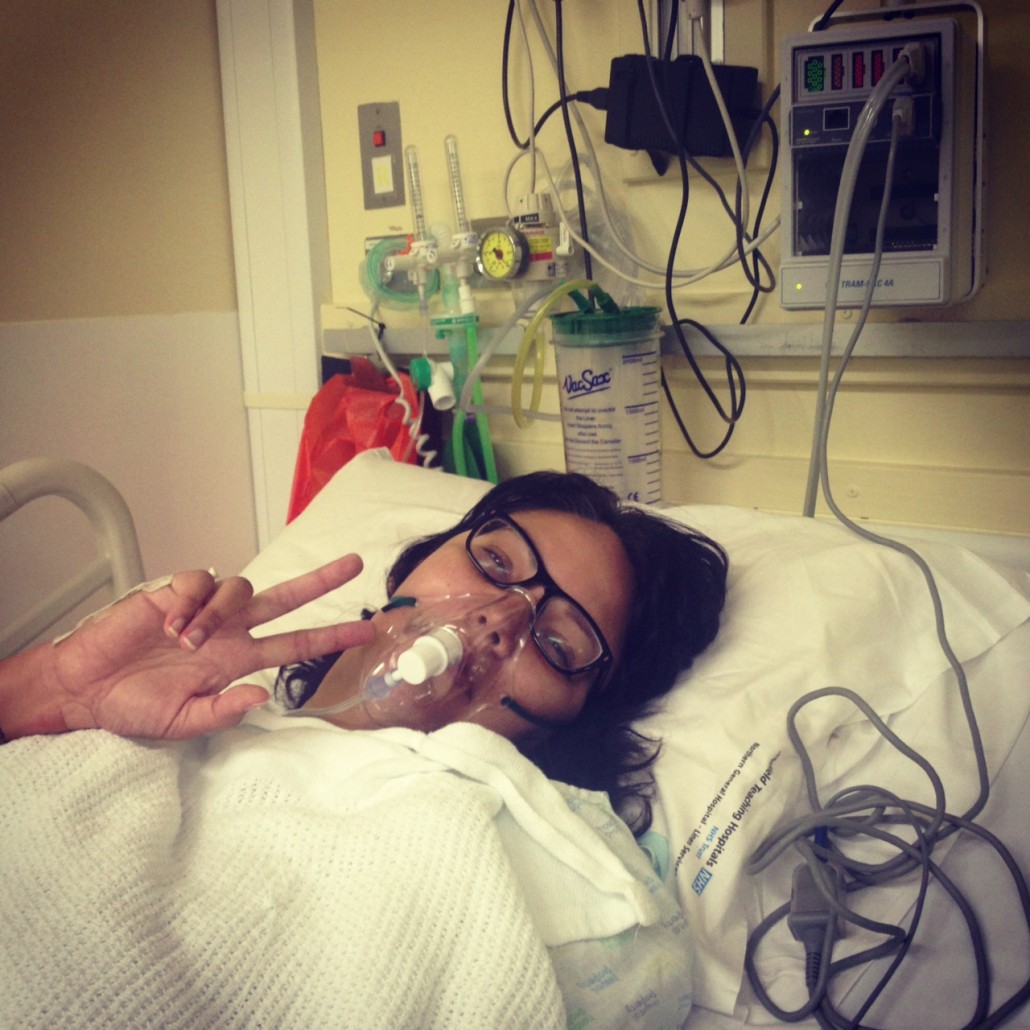
The recovery from this surgery was a nightmare, I had complete Ileus where my bowel stopped working for three weeks and ended up with an NG tube (Nasogastric tube) and on Total parenteral nutrition (TPN). My kidneys began to fail and I nearly died. It was a very difficult time for us all as a family. For weeks I was unable to do anything, the muscles in my arms and legs are wasted and I was left weak and exhausted from the kidney issues.
So 7 weeks later as I was just starting to feel a little bit human, it was a total shock to find the whole country going into lockdown! I hadn’t been able to leave the house for a couple of months and then suddenly we weren’t aloud to leave the house and thousands of people in the UK were dying. I was terrified. Due to Covid, I also lost my radio presenting job and our photography business was severely affected as we couldn’t shoot anything. All just as we had taken on a bigger mortgage.
Too much to bear
To be honest, it all just felt too much to bear. It was like everything was going wrong for us and it hit us both hard. My husband is a total workaholic, and all of a sudden, he had no work at all. At first we struggled with knowing what on earth to do with ourselves. We both felt very down and like we had lost part of who we were with the loss of work.
But there was nothing we could do about it and so as we have had to do so many times before, we tried to find the positives in the situation. We were both healthy (ISH!), we had our kids with us safe and well, we had a beautiful new home and though we desperately were grieving the loss of Lola, we had our chihuahua Lemmy to hug and keep us going. We also talked about how many times after surgery, I get back to things too quickly and don’t give myself enough time to heal, so this enforced rest and downtime could be a blessing in disguise.
We walked a lot in the park, we learnt to bake bread, we bought a blow up hot tub and spent a lot of time chilling in the garden. We played games with the kids, read a lot, watched a lot of movies. There were things that needed sorting in the house that we wouldn’t usually have had time to do, so we decorated and sorted the bathroom and fixed up our camper van. We also started plotting.
If I won the lottery…
One day I said to Timm “If we won the lottery, I would go to university. I never got to go as a youngster and I feel I missed out”. He questioned why I would need a lotto win to do this, and I said that it would mean I couldn’t work full time and study. But as we talked about it, it started to feel more and more possible. I looked into it and saw that as I didn’t have Alevels, the uni would consider my life experience as part of my application.
I began putting together a portfolio which was scary but fun, the worry of others seeing my work nearly got too much. I thought about the experience I had and realised it was more than I had first thought. I knew that I wanted to do art, but I also knew I wanted it to lead somewhere where I could help people. I read up on Art Therapy and just felt that I had found what I was looking for.
During this time, Timm told me how excited he was for me, but that he did feel a little jealous! So I suggested that he do the same! He is a really creative person and has run an arts collective and a photography company for the past ten years. But he wanted to know more about film and have the time to gain new skills. And so he did!
New starts
Next week we both start university at the ages of 39 and 48. Something neither of us ever thought would happen and if I am honest probably wouldn’t have happened without the pandemic.
Often we get so caught up in the daily grind of life, in habits and fall into a groove of just plodding on. And when something happens to blow life apart it can shake you free of those binds to rise up and look at what you actually want from life.
We were happy before. Last year he was running the photography business and ran a music festival in Sheffield and I was working for a charity supporting disabled people as well as having my own radio show on Saturday mornings. Life was good. But that series of events from December through till July just changed everything.
We have had so many ups and downs, nine surgeries in the past 7 years and so much uncertainty around my health and there were moments where I felt like this pandemic was going to push us over the edge. But in true Cleasby style, we have picked ourselves up, dusted ourselves off and tried a new path.
We are both nervous about taking on uni later in life and carrying on running businesses and bringing home the bacon but we have always said that we would rather regret the things we have done than regret not doing them. Who knows where our new paths may take us, but I couldn’t be happier to be facing it with my husband together.
Thinking of others
I know I am super lucky to be in this position, I don’t take it for granted that I have this opportunity when so many do not. It is easy to say we should all look for the bright side, seeking out a positive even when everything is shit but not so easy to do. But what a life with chronic illness has taught me is that nothing is guaranteed, we never know when this life we have could be taken away from us. I have learnt that I need to say yes, to be brave, to try the things I dream of even if I may fail.
The pandemic is simply awful and my heart goes out to everyone who has lost a loved one, has been ill themselves and everyone who has missed time with family and friends, who has had their care cut, who is lonely and struggling.
There is a quote that I often use and it feels apt today.
Happiness can be found even in the darkest of times if one only remembers to turn on the light.
Albus Dumbledore
I hope you can find the light switch, peace and love,
http://www.sobadass.me/wp-content/uploads/2020/09/pandemic.jpg6281200samhttp://www.sobadass.me/wp-content/uploads/2015/09/sobadasslogo.pngsam2020-09-16 20:47:542020-09-16 20:48:00How the pandemic has changed my life
Something I say a lot is to listen to your body, but when you have a chronic illness, the messages you get from your body can feel warped and unclear. When you are unwell for a long time, possibly every day forever, how do you know when to push yourself and when to rest?
My background
I was diagnosed with Ulcerative Colitis in 2004, in 2013 I had my colon removed and an ileostomy formed. This was meant to be my ‘cure’. After living with colitis for 9 years and going through many flare ups, pain, incontinence and medication, I was told that as colitis is only in the large intestine, that in removing it, they are essentially ‘curing’ the disease.
PERFECT! I thought. Only it wasn’t quite so clear cut. In the past 7 years, I have had 9 major surgeries. I had a pouch formed to reverse my stoma, only I had constant chronic pouchitis with it which felt worse than the original colitis! Then I had that all removed, including my anus and rectum and a permanent ostomy formed.
Then came the hernias, both incisional and parastomal. This meant that I have had to have multiple surgeries attempting to fix these issues including a full abdominal reconstruction in February this year. But you know what? I still feel like crap. I have a LOT of pain where the mesh is holding my body together. When I eat, food gets stuck and causes blockages, they think this is due to adhesions. I still have the joint pain and the fatigue from the Ulcerative Colitis and generally, my health sucks and I feel ill all the time. And there is no cure.
But I don’t want to give in to this. I am 39 years old and there is SO MUCH I still want to do. So I push myself to do more and keep going. And this is important, if I didn’t push myself, I really think I would lose it, if I just stayed in bed, in my home and didn’t push my boundaries, I don’t think my mental health could take it. But of course, I also still listen to my body and rest when I need to.
When to push, when to rest?
So when to push and when to rest? The only person who can answer this is you and it takes time to get to be in tune with your body and to learn what your limits are. With chronic illness, there is no black and white. What is right for you one day will be totally wrong the next. Week to week, day to day, hour to hour, our bodies are changing and you really have to learn to go with the flow (which is hard for a control freak like me!)
Self care is vital. Rest, medication (if you take it), exercise, sleep. I have found it so hard to be able to do these things without guilt. To have a rest day, or a bad day in bed when I can’t do anything, I find it tough to not feel like I am letting people down. But I am learning to accept that it is what I need to be able to give on other days.
And on my good days, I push. I go for a walk or a swim, I see friends, I do work, I make plans. I cook, I clean my house, I stay up late and hang out with my family. I make the most of those times and I appreciate how precious my health and energy is. When you have days where brushing your teeth is too much, you really find joy in the days where you can walk your dog.
You aren’t alone
I write this I suppose for two reasons. On one hand, I just want others in a similar place to know they aren’t alone. Because this shit is isolating. It is a mean spirited devil on your shoulder telling you that you are useless, that you are a burden, that your life is worthless. I never feel more alone than when I am in pain at 3am, checking the clock and counting up the abacus of ‘if I fall asleep now, I’ll get x hours sleep’.
Being chronically ill is tiring, it’s a full time job and it can be totally overwhelming. And so if one person can read this and realise they aren’t alone, then it will be worth spilling my guts to you all.
The other reason I write this is for those who aren’t chronically ill to try and explain what life is like. I know sometimes people look at me and see my social media and can’t understand why one day I am in the gym and the next I am bed ridden. Or how I can go away in my camper van when I couldn’t meet them for lunch that week. Or why I make these bonkers plans to fill my life with challenges when I tell you that I am exhausted doing nothing.
I’m sorry I don’t have an answer for you on when to push and when to rest other than to say to listen to your body, however confusing that conversation can be. And if you have the energy, then speak about your life, tell your friends and loved ones, make talking about chronic illness normal. But above all, look after yourself and give yourself some love, you are working harder than anyone will ever understand. And you aren’t alone.
http://www.sobadass.me/wp-content/uploads/2020/08/when-to-push-when-to-rest.jpg6281200samhttp://www.sobadass.me/wp-content/uploads/2015/09/sobadasslogo.pngsam2020-08-18 13:27:302020-08-18 13:27:34Chronic illness: When to push and when to rest
It has been a weird old year so far hasn’t it. I haven’t written too much about Covid-19 as I haven’t really known what to say and I suppose in many ways, I am just surviving it, getting through. But as it all becomes less of a shock and more of a way of life, it feels easier to write about it. The thing I wanted to write about today is the Corona test and how my past experiences have scared the bejesus out of me…
Getting a Covid test
The NHS website says you can have a test (swab test) to check if you have coronavirus (COVID-19) now. You can choose to take the test:
at a test site near you today and get your result tomorrow
with a home test kit
You can get a test:
for yourself, if you have coronavirus symptoms now (a high temperature, a new, continuous cough, or a loss or change to your sense of smell or taste)
for someone you live with, if they have symptoms
if you live in England and have been told to have a test before you go into hospital, for example, for surgery
if you live, work or study in an area with a coronavirus outbreak
If you have symptoms, you should get a test as soon as possible. You should test within the first five days of developing symptoms. To get a Covid test, apply online on GOV.UK. Or call 119 if you have problems using the internet.
Now I will, of course, get tested if I need to. If I develop symptoms or someone in my household does, or if I am told it is necessary. But here is the bit that is sending me into utter panic.
The Covid test involves taking a swab of the inside of your nose and the back of your throat, using a long cotton bud.
NHS website
Just writing the words was upsetting. And I know I may sound daft, or dramatic. But the thought of something going up my nose horrifies me. In February this year, after surgery and complications, I had to have an NG tube up my nose and into my stomach for a couple of weeks. It was necessary. It helped a lot. But I hated it.
Mind connections
It is interesting how the mind works, the connections it makes. I was incredibly poorly at this time and the NG tube was the least of my worries! I was healing from major abdominal reconstruction surgery. My gastro system wasn’t working. I was in a lot of pain. My kidneys were starting to fail. But it is this little tube up my nose that my mind has focussed in on.
Since then, I can’t bear anything touching my nose. Specifically inside my nostrils. Which is kind of ok as not much touches inside your nostrils! But blowing my nose, or cleaning my nose actually makes me gag now. And so when I first saw the videos of people having the Covid test, I burst into tears. The long swab going deep into the nostril freaked me out. I instantly felt panicked and frightened. The thought of having to have the Covid test done terrifies me.
Now, I am not suggesting that the test is scary. I have friends who had had the test and they have said it’s a weird feeling, it did make them gag a little, but all in all it was easy and quick. And of course entirely necessary. And if I have to have the test, I will do so. And I am sure it is no where near as bad as my head is telling me it will be.
Trauma
But it is things like this, the residue of traumatic experiences, that become a part of your life afterwards. There is nothing anyone can say to me that will make me worry less about this. And as I said, I know logically that it will be fine, that I am connecting a simple test with an upsetting and frightening time in my life. But it feels real.
There are many things, after 9 major surgeries, that have traumatised me. And each trauma is so personal, so delicate, so real.
I struggle to watch infomercials now. How silly does that sound? But when I was having panic attacks in the middle of the night, my husband would put on informercials and we would watch them together. They require no thought, no effort, and the low volume and soft light that filled our bedroom pushed out the panic and tears. But now when I see them on TV, it takes me back to those moments. And I don’t feel anxious when I watch them, but I do feel very sad.
I had a moment recently when I sat on the edge of my bed at 2am. I looked down at my feel planted on the floor and I was back in time. I was back to being at home after surgery, vomiting bile as my kidneys were unbeknownst to me shutting down. I was gripping the bed, seeing the splashes of green watery bile land on the floor. I was panicking, knowing something was very wrong. I was weak, my legs wouldn’t work and falling back on the bed. I was worrying I would die at home, thinking about how Timm would need to get my kids out of the house so they didn’t see my dead body and frighten them. All of this from looking at my feet on the bedroom floor.
The mind is an interesting place. And as I process the difficult and frightening events that I have gone through with my health, all manner of past upsets rise to the surface. Things from my childhood, my teenage years. All the times I felt fearful and scared, upset and hurt, they all come up together.
PTSD
Post Traumatic Stress Disorder (PTSD) has come up in conversation a few times with medical professionals and me. I feel it is probably quite an accurate description of what is going on. But it is hard to deal with those feelings of trauma when you are still going through the traumas every day. How do I come to terms with a past surgery whilst planning future ones? How do I deal with the devastation of pain and suffering whilst simultaneously dealing with the fears of a lifetime of it?
I don’t have the answers I’m afraid. Sorry if you were hoping to get to the end of this post and find five ways you will definitely beat your PTSD…
But what I do know is that for me, the acceptance and understanding of it helps. I don’t keep those fears in, those moments of pure panic, those time machine times where you feel right back there in the bad time. I speak about it and I don’t let it have the power. I talk about it and deconstruct it. I literally pull the moment to pieces.
I tell myself “Well, of COURSE you are worried about something medical going up your nose! That is OK! It would probably be a bit weird if you WERENT worried about it. What happened to you was BIG and SCARY. And BIG and SCARY things take up more space in your head than the small easy times. It is OK. You are allowed to feel this. But it is just a feeling. It will pass.”
Speak up
I tell others about it, I speak to my husband, my friends. Of course, I blog the shit out of it, because that’s what I do! And I find as with a lot of things, for me, talking about it takes the power away and gives me back control. It may not be right for everyone, but if you are reading this and can understand, if you are struggling yourself, then speak to someone. Speak to your GP, ask for support, don’t struggle alone.
And yes, I know how easy it is to write that, oh just go chat with your GP! But in reality, that feels like a mountain to climb. But you aren’t alone. You can deal with this. If you can just find one person to speak to who you trust, then it is the first step to starting to feel better. I believe in you, I understand, you can do this.
Well. This ended up being a little bigger than I first thought. I was laid in bed in pain, unable to sleep and I thought I would write up a quick blog post about how noses freak me out and lay out some info on getting tested for corona and all this stuff fell out of my brain and through my fingers!
Update on me
I will be honest, I am not doing too great at the minute. I am still waiting on CT results. I am in a lot of pain, I struggle to eat. I go between stubbornly eating what I want and liquid/soft diets. I know something isn’t right but I am too scared to think about what that is. I am having weird output, lots of leaks and feeling a bit dehumanised by it all. I am fed up of changing bed sheets (well of waiting for someone to do it for me as I don’t have the strength to do it). I am fed up of poo on my clothes. I am worried about how on earth I will manage doing a degree in the midst of all this (Seriously, what the fuck am I DOING???) I am just a bit all over the place. But there is my update, I will write more soon I am sure.
For now, just be kind yo. Seriously, it is a stressful and messed up time we are living in. Be kind to yourself, be kind to others. And as always, I love to see your messages and comments. I do try my best to reply to everyone but sometimes that is a bit overwhelming but know that I do read each and every one and they make such a difference.
http://www.sobadass.me/wp-content/uploads/2020/07/Screenshot-2020-03-10-at-15.02.39-600x667-1.png317600samhttp://www.sobadass.me/wp-content/uploads/2015/09/sobadasslogo.pngsam2020-07-30 03:51:172020-07-30 03:58:08Dreading the Covid test – when past trauma effects current needs
When I first had my surgery to remove my bowel and form my stoma, I had never even seen an ostomy bag before. The stoma nurse came to see me the night before and brought me a bag to see then after I woke up, I had the bag stuck to me. I went home with more of the same ileostomy bags and honestly I didn’t have a clue that there were any different types of bags. So when my body changed and I first had a parastomal hernia, I didn’t know I needed to get a different ostomy product.
Trying new ostomy products
And I think a lot of ostomates are the same, we stick to the bag we are given in hospital and don’t question or research whether there are other bags and products that would suit us better. Which is weird when you think about it, you wouldn’t just stick to the same hat for the rest of your life just because a shop assistant gave it you and told you it suits you.
Stoma nurses do a cracking job, they can and do recommend lots of different products if you are having issues. But as with everything with living with a chronic illness, it is important to be your own advocate and do your own research.
This is especially key if you have a change to your stoma or your body. If you gain or lose a lot of weight or if you develop a parastomal hernia. As you all may know, I have had a lot of hernias over the past seven years, including parastomal hernias. They effect every part of your life, especially the way your ostomy bag fits. I had loads of leaks due to my old bags fitting badly with the change of shape of my body.
Free samples
Do some research and you can get free samples of most products, no one ever told me this! I decided to try the Aura Profile which available in a colostomy bag, ileostomy bag and urostomy bag. If you head over to their website, you can get a free sample here.
The Aura Profile moulds around the profile of your parastomal hernia. The flange is soft, and it inverts on itself. So, it shapes around your hernia and fits really snugly against your stoma. Parastomal hernias can get bigger and smaller throughout the day and totally change shape, this makes it super challenging to deal with and is why I have had so many leaks in the past. But the Aura Profile does a great job at adapting to your tummy size and shape. This also helps if you have dips, folds or scars on your skin around the stoma as the bag moulds to you.
I had quite sore skin around my stoma from the leaks and as we know, bags don’t like to stick to wet, sore skin. But within a week of using the Aura Profile, I noticed a huge improvement to my skin. If I’m honest, I hadn’t read this bit of the leaflet that came in the box (who does??) but I saw that it has Manuka honey in the flange that is really soothing and promotes healthy skin. Absolute bonus!
Aura Profile
I didn’t get the belt to go with the bag and it is a different shaped hole fitting to the belt I already have and it didn’t fit. So I would recommend getting the belt to go with the Aura Profile. I don’t wear a belt all the time, but with having a parastomal hernia, it adds a bit of security that I like.
The flange was nice and sticky and because it is soft, I found it easy to press it down around my stoma to get a nice close seal. It has the measurements and cutting guides printed on the peel off back so was easy to cut to shape and there is a stoma size guide on the box itself too.
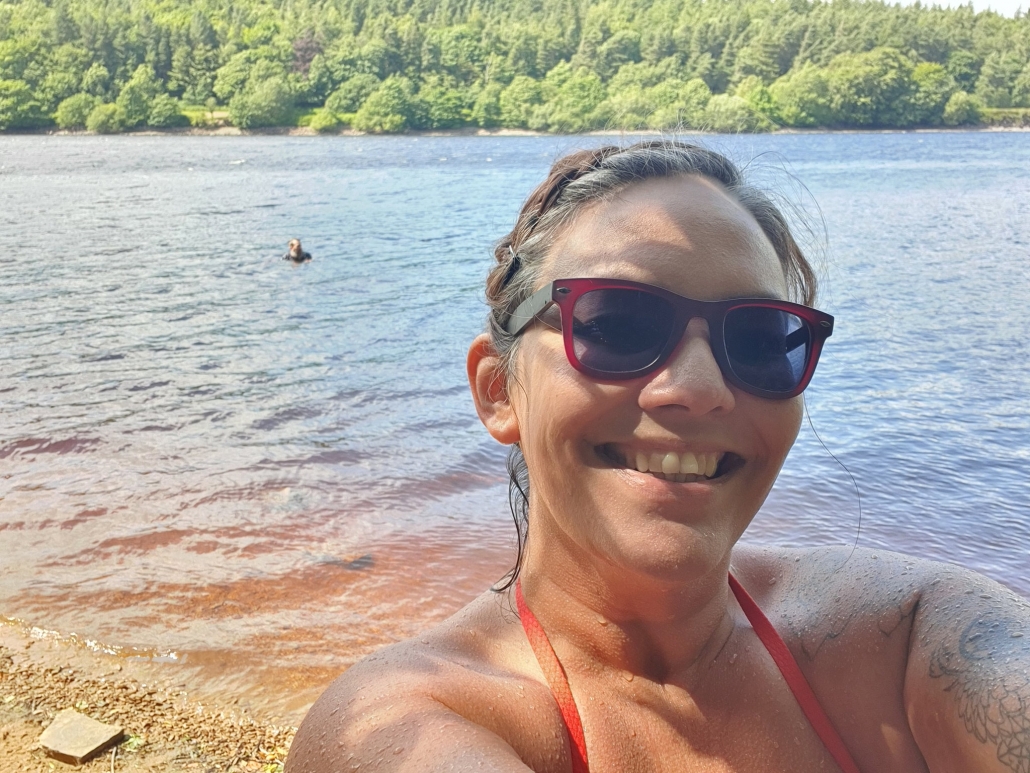
I have one of those blow up hot tubs in the garden and I also do some wild swimming, so I have had chance to wear the Aura Profile in water and it was spot on. No lifting at the edges of the flange and definitely no leaks. When I went swimming, I found my tummy swelled up quite a bit and the bag definitely worked with that change in shape and still fit really well.
Parastomal hernia
If you have had a change to your body, or if you feel your bag isn’t fitting well right now, I would just remind you that there are so many products out there. You don’t have to struggle on and you shouldn’t.
I really liked the Aura Profile and would recommend you give it a try, if it doesn’t work for you then don’t give up! Speak to your stoma nurse, chat with other ostomates, do a bit of research and find the best product for you. I would also say that our bodies and stomas can change and just because something didn’t work for you last year, don’t write it off forever. It is always worth trying again if your needs have altered.
It can feel really isolating to have a parastomal hernia. I felt a weird guilt, had I done something wrong? Did I not allow enough recovery time? Was I too impatient? I felt worried that this was my fault and so I didn’t like to talk about it. I know this is silly, that parastomal hernias just happen to some people. But knowing there were products designed just for this issue made me remember that I’m not alone in this.
I was asked to review the Aura Profile and so this is a sponsored post, but as always, I only give honest reviews and I only work with businesses that I believe in. This is why I don’t do many reviews as it is so important to me that I don’t promote anything that I wouldn’t happily use myself. For more information about the Aura Profile head to the Clinimed website.
You can follow Clinimed on social media on Facebook, Twitter and Instagram here:
After a tough year, with surgery in Feb and a difficult recovery that ran straight into lockdown, I have felt incredible closed in. I had been to the supermarket and walked my dog in the park, but had barely been anywhere else since January. So when it was allowed to camp overnight, we headed straight out.
We have a 1968 VW campervan that we bought last year and I love it so much. For years, we had a caravan and used to camp every year with our kids and friends. But as the kids have got older, they are less thrilled about the idea of camping with us for a week! We have always wanted a VW Campervan and so last year, we treated ourselves and made the leap! We also bought a large bell tent style awning tent that attached to the van and is lovely and cosy, so if the kids do want to come with us, they still have that option. (Seriously, it has a log burner in it!!!)
So we have been out the past two weekends, exploring, setting off with only a vague idea of where we would head. Or a final destination with a random route. I have learnt to read a map! Something that I have never really taken much notice of because of Sat Navs and maps on your phone. But the thing with these things is that it gives you the fastest route to a place, not necessarily the most interesting.
For example, last weekend, we headed to the coast. But I navigated via a road map, this meant that I found interesting places along the way and we stopped off at a medieval village that I never knew even existed.
Getting out in the camper is just heaven to me. Just changing your scenery, especially after months of lockdown, is wonderful. I know, but sometimes forget, how much being out in nature positively effects me. Even if that is just a walk in my local park, the green, the fresh air, the exercise, it changes my mood almost instantly.
Mind have the following information about how being in nature can benefit you.
“Spending time in green space or bringing nature into your everyday life can benefit both your mental and physical wellbeing. For example, doing things like growing food or flowers, exercising outdoors or being around animals can have lots of positive effects. It can:
Spending time in nature has been found to help with mental health problems including anxiety and depression. For example, research into ecotherapy (a type of formal treatment which involves doing activities outside in nature) has shown it can help with mild to moderate depression. This might be due to combining regular physical activity and social contact with being outside in nature.
Being outside in natural light can also be helpful if you experience seasonal affective disorder (SAD), a type of depression that affects people during particular seasons or times of year. And people tell us that getting into nature has helped them with many other types of mental health problems.”
Of course, it is easy for me to say this when I am feeling emotionally and mentally healthy. But for some people there can be many barriers to getting out. It could be that you are feeling low and unmotivated. I remember at my lowest that the thought of just getting out of bed was too much, let alone heading out into nature for a walk. My GP was wonderful and offered so much support, he actually “prescribed” me to get out of the house every day. He said even if I could just get outside my house and sit in the fresh air for 10 minutes, it would be beneficial. He told me to try and walk, with my phone off and my head up; to look around me and appreciate my surroundings. This way of pushing me really helped. I felt like it was a prescribed part of getting better. I would take my anti depressant, go to my talking therapy and get outside every day, even when I really didn’t want to.
It can also be tough if you have physical barriers, if you struggle with fatigue or pain. Or if you physically struggle to get out alone. Unfortunately a lot of places are still inaccessible to wheelchair users or people with mobility issues. I found this website, The Outdoor Guide, that has a list of wheelchair friendly walks around Britain. If there is nothing on here near you, you could ask friends or family for their suggestions or on social media or your local disability groups.
Some people struggle with socialising with others or they feel isolated and don’t have anyone to go out with. If you don’t do well in groups or crowds, perhaps you can find somewhere quiet in your local park. Just sitting under a tree or finding a less used space. And if you are looking for someone to get out and walk with, check out your local council to see if there are any groups near you that could offer support and connect you with others.
Obviously I am incredibly lucky to have the money to have a campervan and be able to get out and about in it. But financial constraints can be a barrier. Whether it is the money or the time if you are busy working. For me, even just sitting in my garden, or on my doorstep and taking a little time for myself to get away from computers and technology and breathe, helps so much. Look for the free spaces in your local area where you can get to quickly and for free.
I just can’t explain how much good it has done me to get out. I was feeling like I had not made good progress since my last surgery. I was so poorly and my kidneys started to fail, I couldn’t eat or drink and was on TPN through a PICC line. I lost a lot of weight and muscle tone. My leg muscles pretty much faded away. I am still in a lot of pain and tire very quickly, so I choose options that are low impact and short bursts.
A few weeks ago, I stood on Burbage Edge, it was a few minutes walk from the carpark. But as I walked over the uneven ground, I remembered being unable to walk even a few metres to the toilet. I was looking at the ground as I walked and could almost see the hospital lino that I had struggled to walk across just a few months ago. It made me cry. I wept but not in sadness, they were tears of gratitude, of strength, of surprise in realising how far I have come.
Last week, I stood in the Peak District and I looked out across the most beautiful view, and despite my pain, despite the two corsets I was wearing and the slightly fuzzy head from painkillers, I felt like a queen. I felt like a champion. I felt strong and happy, my heart felt full and I couldn’t stop smiling.
I know it can be incredibly tough, and know that I don’t believe getting out in nature is some sort of magic cure. But for me it has helped so much and maybe it could help you too?
http://www.sobadass.me/wp-content/uploads/2020/07/108347696_722769995211231_6881694388888975493_n.png280334samhttp://www.sobadass.me/wp-content/uploads/2015/09/sobadasslogo.pngsam2020-07-15 12:46:402020-07-15 12:46:46Getting out in nature to heal